
In the early days of the web, we were thrilled just to have a “Home” page that looked the same for everyone. By 2015, we were excited about “Responsive Design” that adapted to screen sizes. But in 2026, the static website is officially a relic of the past.
Welcome to the era of Generative Media.
We are moving into a world where your website doesn’t just respond to a user’s device—it generates itself in real-time based on who is looking at it. As a developer with 25 years of experience, I’ve seen many “game-changers,” but the shift toward 1-to-1 generative marketing is the most profound architectural leap yet.
What is Generative Media?
Generative Media uses real-time AI to swap out images, headlines, videos, and calls-to-action (CTAs) the moment a user lands on your site. Instead of showing the same “Hero” image to a CEO in New York and a small business owner in Phoenix, the site dynamically creates a visual narrative that resonates with their specific industry, location, and intent.
The 2026 Marketing Reality:
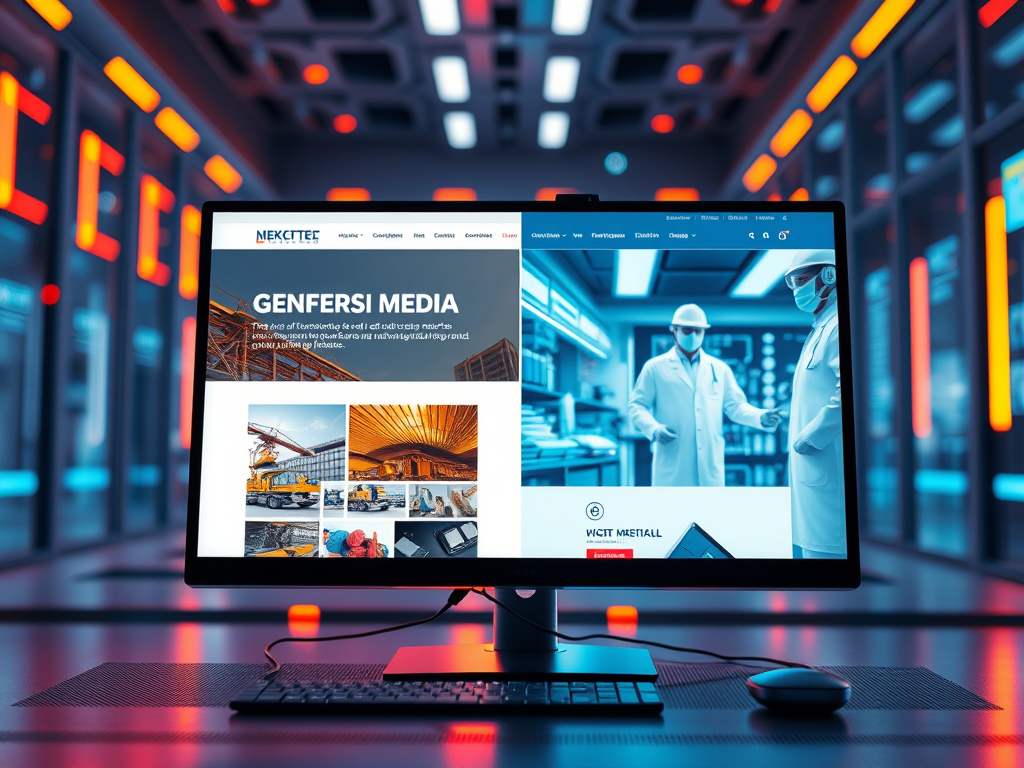
- The Visual Shift: A visitor from the construction industry sees images of modern architectural projects, while a dental surgeon sees high-tech medical environments—on the exact same URL.
- The Tone Shift: The copy adjusts its “voice.” It might be technical and data-heavy for an engineer, or punchy and benefit-focused for a marketing director.
- The Dynamic CTA: Your “Book a Call” button might transform into “Start Your Security Audit” or “View E-commerce Case Studies” based on the user’s predicted needs.
The Technical Challenge: Performance vs. Personalization
This sounds like a dream for marketers, but for developers, it can be a performance nightmare. If not handled correctly, generative media can lead to “layout shift” and massive page-load bloat.
At Fischer Web Designs, we tackle this using Edge-Computed Generative Blocks:
- Lightweight AI Integration: We don’t load a massive LLM on every page view. Instead, we use “Edge Functions” (scripts that run at the server level closest to the user) to swap out pre-defined generative components instantly.
- Asset Optimization: We use SVG-based generative patterns and modern formats like WebP/AVIF that are generated on-the-fly, ensuring the “personalized” version of your site is just as fast as the “static” version.
- Maintaining the “Web of Trust”: This is the most important part. Hyper-personalization can easily cross the line into “creepy.” We ensure that these generative changes are based on Zero-Party Data (preferences the user has shared) rather than invasive tracking.
Why This Matters for Your Business
In 2026, the average attention span for a website is measured in milliseconds. If a visitor doesn’t see something that feels relevant to their specific problem within the first two seconds, they bounce.
The Benefits of Generative Media:
- Sky-High Conversion Rates: When the content is perfectly aligned with the user’s intent, the “friction” to buy disappears.
- Reduced Bounce Rates: Users stay longer on sites that feel “built for them.”
- Future-Proof Branding: You aren’t just another generic template; you are a cutting-edge brand that understands its audience.
The Verdict: Don’t Let Your Site Become a Dinosaur
The transition from static to generative is happening faster than many realize. While big tech firms are already using these tools, I am focused on bringing this Hyper-Personalization technology to my clients in a way that is secure, fast, and ethical.
Is your website still stuck in the “One-Size-Fits-All” era? Let’s talk about how we can integrate dynamic content blocks into your site to create a 1-to-1 marketing reality that drives real results. The future of web design isn’t just about how it looks; it’s about how it adapts.
Leave a Reply