
Every few years, a new design trend sweeps the internet—be it massive background videos, micro-animations, or ultra-minimalist navigation. While keeping your site fresh is important, constantly chasing fleeting trends leads to expensive, continuous redesigns.
As someone with over 20 years in digital development, I know the difference between a trendy website and a future-proof one. A truly future-proof website is built on a strong, adaptable foundation that allows for seamless evolution, not painful demolition.
The secret isn’t in the colors or the fonts; it’s in the structure. Here are three critical, underlying design and development elements that will keep your website scalable, stable, and ready for whatever the next decade throws at it.
1. Modular Design: The Building Block Approach
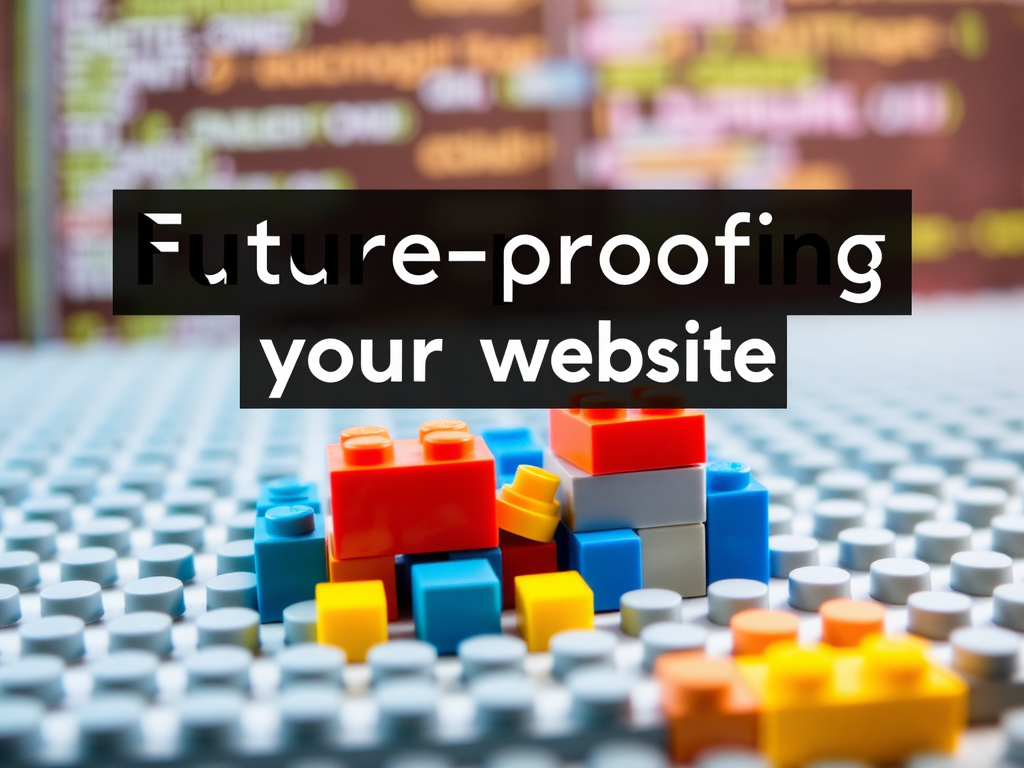
Think of your website like a set of LEGO bricks, not a single sculpted statue. Modular design (or component-based design) treats every element—a button, a navigation bar, a testimonial slider—as an independent, reusable component.
Why It Lasts:
- Speed of Change: If you need to change your primary brand color, you only change the color for the core button component. Every button instance across the entire site instantly updates. This drastically reduces development time and cost for future updates.
- Consistency: It ensures visual consistency (a key element of strong branding) across every page, preventing design drift and improving user trust.
- Scalability: When you launch a new product line or add a new service, you don’t build a page from scratch; you simply assemble pre-tested, high-performing components.
2. The Power of a Design System
Modular design is the “what” (the components), and a design system is the “how” and “why” (the rules). A design system is a single source of truth that documents every component, guideline, and principle used in your site’s development and branding.
Why It Lasts:
- Clear Communication: It eliminates ambiguity. Whether a designer, a copywriter, or a developer touches the site, everyone refers to the same documentation. For example, it defines exactly what a “H2 heading” looks like, how much padding surrounds a form, and the tone of voice for error messages.
- Efficient Onboarding: If you hire a new marketing team member or developer, they can immediately understand the underlying structure without lengthy training, accelerating their productivity.
- Code Cleanliness: Since the system is documented, the accompanying code is typically cleaner, more commented, and easier to debug—which leads us to the final point…
3. The Unsung Hero: Clean, Semantic Code
A beautiful front-end is irrelevant if the code running beneath it is messy, outdated, or poorly structured. This is where the long-term experience of a developer is crucial. We focus on semantic HTML and organized CSS/JavaScript.
Why It Lasts:
- Future Technology Adoption: When a new technology or browser standard is released (e.g., a new version of JavaScript or a change in how Google crawls sites), clean code is much easier to adapt. Messy code often requires throwing out entire sections and starting over.
- SEO Performance: Clean, semantic code is more easily interpreted by search engine robots. If your code is lightweight and follows modern standards, your site performance (speed) is naturally optimized, directly boosting your SEO rankings.
- Developer Hand-Off: Investing in clean code means the site isn’t tied to the original developer. If you ever need to transition the site to an internal team or a different agency, the process is smooth and far less expensive.
The True Cost of Cheap Design
When you receive a quote for a new website, the difference between a high-end, future-proof build and a cheaper, quick fix often lies in the three elements above.
A cheap site might look great today, but its lack of modularity and clean code means every small update next year will be a painful, expensive retrofit. A site built with a modular system is an investment that pays for itself through efficiency, stability, and unparalleled adaptability.
Ready to build a website that’s designed not just for today, but for the next five years? Let’s discuss a scalable strategy for your business.
Let’s Talk About Building Your Future-Proof Website Drop me a line
Leave a Reply